Visualizzazione post con etichetta Sandro Mussida. Mostra tutti i post
mercoledì 3 settembre 2014
Guitars Speak: le chitarre contemporanee di Alessandra Novaga e Giacomo Fiore
Download PODCAST
Questa sera alle 21 ricomincia Guitars Speak il programma radio interamente dedicato alla chitarra, sempre sulle frequenze di Radio Voce della Speranza.
Tonight at 9 PM Guitars Speak the radio program entirely devoted to guitar, is back always on Radio Voce della Speranza
In questa prima puntata ascolteremo i nuovi lavori discografici, "La Chambres dex Jeux Sonores" e "IV electric american guitar", usciti nel corso dell'estate del 2014 da parte di Alessandra Novaga e Giacomo Fiore. Due interessanti uscite discografiche, una in Cd e l'altra in Lp, interamente dedicate al repertorio contemporaneo e eseguite con chitarre elettriche.
In this first episode we will listen to two new records, "The Chambres dex Jeux Sonores" by Alessandra Novaga and "IV american electric guitar" by Giacomo Fiore, released in the summer of 2014. Two interesting releases, one is a Cd and the other a Lp, entirely dedicated to contemporary repertoire and performed with electric guitars.
Playlist:
- International Hash Ring (Travis Just) - Alessandra Novaga
- Unitil it Blaze (Eve Beglarian) - Giacomo Fiore
- In Memoria (Sandro Mussida) - Alessandra Novaga
- freeHorn (Larry Polansky) - Giacomo Fiore
martedì 12 agosto 2014
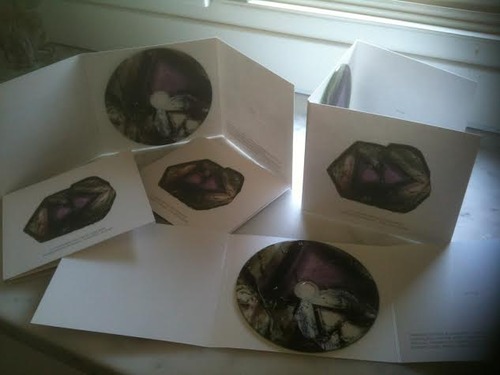
Review of LA CHAMBRE DES JEUX SONORES by Alessandra Novaga, SETOLA DI MAIALE SM2690, 2014
First
record for a "new
artistic
life"
by
Alessandra
Novaga.
Why
I
wrote about
a "new
life"?
Because by some
years
Alessandra
has
begun
a
new exploration
around in
electrical
/
improvised
/
contemporary
areas
opening her artistic
career
to
new
instruments,
new
sounds
and
collaborations.
After
the previous
cd
made
with Spring
Duo,
always
dedicated
to
contemporary music,
but still
played with her
classical guitar,
this
"
CHAMBRE DES JEUX SONORES "
opens
not
only
to
new
sounds,
but
also to new
musical
philosophies.
I
try, in
this
review,
to
point
out
some
possible
ways
of
listening and
meditations
about these
musics.
First meditation: the title of the cd. "La Chambre Des Jeux Sonores" suggests a dimension of play and space exploration, construction of a non-rigid but more free and expressive.
Second
meditation:
the choice of
the
music label.
Those
who follow
my blog
know
my
"affection"
towards Setola
di Maiale,
italian independent
label whom,
thanks to
the
consistent
efforts
his founder
Stefano
Giust,
from
over twenty-years
is
devoted
to
improvisation
and
the
more
free
and
independent
musical
thoughts.
So
the choice
of
Alessandra
to produce
this
work with
this
label
denotes,
in my opinion, even the
desire to move
into
areas
other
than those
usually
used
for the
contemporary
music
of
academic
excellence, and
moving
on
land
over
charged
by
the free
edge.
Third
meditation:
listening
to the
5
tracks
that
“built” this record,
International
Hash
Ring
by the
New
Yorker
Travis
Just,
In
Memoria
by
Sandro
Mussida,
Collaborating Objects
by American
Paula
Matthusen,
Erosive
Raindrops
by Vittorio
Zago,
Untitled,
January
by Francesco
Gagliardi,
denotes not
only the use
of
open
structures
with
the possibility of
improvisation
by
the interpreter
but
also
a
more
...
"material"
component
in her sound.
The
sound
of
the electric guitar
is
often treated
with
the use
of
effects and
used
in a very different manner from what
we
are used to listen to
in
other
contexts (rock,
jazz, blues)
in
which
the electric guitar
has
accustomed us.
The
result is a
"transfiguration"
of
electric
sound
in
an extremely
innovative
and
interesting way.
On
this record,
it
goes beyond
a
"simple"
use
of
the guitar as
we
are
accustomed
to,
a
job that
transcends
a
possible
melodic
structure
with
the (musical) instrument
used
as a (sonic) tool
generating
sound
in
a
similar
manner to what
people
like
Keth
Rowe,
Fred
Frith
and
Eugene
Chaudborne
have
worked over the last
30
years of
free
improvisation.
I
don’t think it’s a coincidence that
some
of
the scores
used
herein
are
outside the
“normal
framework”
to
move
towards
visual
elements
such
as images and
video
aimed
at stimulating
a
different
musical
gesture
on
the part
of
the interpreter,
in
a
"set"
swaying
more
and more
towards
pure
performance.
Maybe
all of this is no so “new” as
it
seems
to me to
synthesize
and
build upon
the
causal
randomness
of
Cage,
the
irony of
Fluxus,
the
free-thinking
improvisational
European
‘70s,
the
New
York
intelligentsia,
the
physicality
of sound
and
electrical
industry
by Milan
city (where Alessandra lives),
I feel the
lack
of
a new "Opera
Aperta"
like the one by Umberto
Eco
who
knows how to
synthesize
and
better
delineate
these
new forms
...
maybe
we should
ask
Giuliana
Bruno
to
focus its
semiotic
look
for
a new
Atlas
of
(musical
and sound) Emotions.http://www.setoladimaiale.net/record.asp?id=SM2690§ion=audio
lunedì 11 agosto 2014
Recensione di LA CHAMBRE DES JEUX SONORES di Alessandra Novaga, SETOLA DI MAIALE SM2690, 2014
Primo
disco del “nuovo corso artistico” per Alessandra Novaga. Perché
scrivo di “nuovo corso”? Perché è da qualche anno che
Alessandra ha iniziato una nuova esplorazione in ambiti
elettrici/improvvisativi/contemporanei aprendo la propria carriera
artistica a nuovi strumenti, nuove sonorità e collaborazioni. Dopo
il precedente cd realizzato con lo Spring Duo, dedicato sempre alla
musica contemporanea, ma dove imbracciava ancora la sua chitarra
classica, questa “stanza dei giochi sonori” apre a non solo nuove
sonorità, ma anche a nuove filosofie musicali.
Provo,
in questa recensione, a indicarvi alcuni possibili percorsi di
ascolto e di riflessione su queste musiche.
Prima
riflessione: il titolo del cd. “La Chambre Des Jeux Sonores” fa
pensare a una dimensione di gioco e di esplorazione
spaziale-architettonica, di una costruzione non rigida ma più libera
e espressiva.
Seconda
riflessione: la scelta della casa discografica. Chi segue il blog
conosce il mio ”affetto” nei confronti di Setola di Maiale,
etichetta indipendente, che grazie al coerente impegno di Stefano
Giust, è riuscita a superare una ventennale carriera dedicata
all’improvvisazione e al più libero e dedicato pensiero musicale.
La scelta quindi di Alessandra di produrre questo lavoro con questa
etichetta denota, a mio avviso, anche il desiderio di muoversi in
ambiti diversi da quelli solitamente utilizzati per la musica
contemporanea di stampo accademico, spostandosi su terreni più
praticati dalla libera avanguardia.
Terza
riflessione: l’ascolto dei 5 brani che compongono il disco,
International Hash Ring del newyorkese Travis Just, In Memoria del
milanese Sandro Mussida, Collaborating Objects della statunitense
Paula Matthusen, Erosive Raindrops di Vittorio Zago, Untitled,
January di Francesco Gagliardi, denota non solo l’uso di strutture
aperte con possibilità di improvvisazione da parte dell’interprete
ma anche un uso più … “materico” della componente sonora. Il
suono della chitarra elettrica viene spesso trattato con l’uso di
effetti e utilizzato in un modo molto diverso da quello a cui siamo
abituati in altri contesti (rock, jazz, blues) a cui la chitarra
elettrica ci ha abituati. Il risultato è una “trasfigurazione”
del suono elettrico in modo estremamente innovativo e interessante.
In questo disco si va oltre a un “semplice” impiego della
chitarra come siamo abituati, un impiego che trascende una possibile
struttura melodica e che vedo lo strumento (musicale) utilizzato come
strumento (fisico, in inglese potrei usare il termine “tool”) per
la generazione di suono in una maniera simile a quella cui gente come
Keth Rowe, Fred Frith e Eugene Chaudborne ci ha abituati nel corso
degli ultimi 30 anni di libera improvvisazione. Non a caso alcune
delle partiture qui utilizzate esulano dalla normale struttura
grafica per andare verso elementi visivi come immagini e video atti a
stimolare una diversa gestualità musicale da parte dell’interprete,
in un “insieme” che ondeggia sempre più verso la pura
performance.
In
questo contesto che forse tanto nuovo non è dato che mi sembra
sintetizzare e rielaborare la causale casualità di Cage, l’ironia
di Fluxus, il libero pensiero improvvisativo europeo degli anni ’70,
l’intellighenzia newyorkese, la fisicità del suono elettrico e
laboriosità milanese, avverto la carenza di una nuova “Opera
Aperta” alla Umberto Eco che sappia sintetizzare e meglio delineare
queste nuove forme … forse bisognerebbe chiedere a Giuliana Bruno
di concentrare il suo sguardo semiotico per un nuovo Atlante delle
Emozioni (musicali)
domenica 2 settembre 2012
Video: Alessandra Novaga
IL TUTTO, NON LA PARTE (2012) - Sandro Mussida
From "Sette Studi Elettrici"
Written for and performed by Alessandra Novaga
Live Performance, 4th Aug. 2012 New York, St.Mark's Church in the Bowery - Incubator Arts Project, Ontological Theater. Hurla Janus
Giovanni De Carlo, Andrea Giustiniani, Carlotta Redaelli e Marco D'Apollonio suonano il quartetto per chitarre elettriche "E" tratto da As Usual Dance Towards the Other Flight to What is Not di Fred Frith a Milano durante il corso di chitarra nella Scuola Media Ascoli il 17 Aprile 2012
venerdì 31 agosto 2012
Hurla Janus festeggia John Cage a Milano, il 5 Settembre, in Triennale!
17.00 - 18.00
Guida all’Ascolto “Empty Words”- Elio Marchesini
18.00 - 18.45
Dialogo tra Inkyung Hwang, autrice del "Lungo treno di John Cage” e Michele Porzio, autore della “Metafisica del Silenzio, John Cage”
18.45 - 19.30
Concerto per pianoforte preparato, Christian Schmitz
20.00 - 22.00
Concerto e Performances a cura di HurlaJanus Ensemble (Elio Marchesini, Sandro Mussida, Alessandra Novaga), elettronica a cura di Giorgio Sancristoforo (Agon).
· Imaginary Landscape IV (1951) *
· Sonata for Clarinet (1933) - Stefano Cardo
· Telephones and Birds (Buskers) (1977) Hurla Janus
· Suite For Toy Piano (1948) - Lorena Portalupi
· Variations VI (1966) - Giorgio Sancristoforo
· The Wonderful Widow Of Eighteen Springs (1942) - Olivia Salvadori e Sandro Mussida
· Dream (1948) - Alessandra Novaga
· Composed Improvisation For Snare Drum Alone (1987) - Elio Marchesini
· Living Room Music (1940) - Hurla Janus + Stefano Cardo
· 4'33'' (1952) Inkyung Hwang e Christian Schmitz
* Elio Marchesini, Sandro Mussida, Alessandra Novaga, Olivia Salvadori, Stefano Cardo, Lorena Portalupi, Inkyung Hwang, Christian Schmitz, Matteo Codignola, Elena Russo Arman, Letizia Muratori
http://www.triennale.it/
Iscriviti a:
Post (Atom)