Visualizzazione post con etichetta Giuseppe Chiaramonte. Mostra tutti i post

domenica 21 febbraio 2016

Giuseppe Chiaramonte in concerto Milano - Vienna - Mesoraca


28 febbraio 2016, h. 17:00 
Milano, Magazzino Musica (via Soave 3 - MM Porta Romana, Milano, Italia)
Recital solistico - chitarra romantica
Musiche di: G. Sanz, D. Scarlatti, J.S. Bach, M. Giuliani, E. Giuliani, J.K. Mertz

8 marzo 2016, h. 19:00
Vienna, Italienisches Kulturinstitut Wien (Ungargasse 43A, 1030 Wien, Austria)
Recital solistico - chitarra romantica
Musiche di: G. Sanz, D. Scarlatti, J.S. Bach, M. Giuliani, E. Giuliani, J.K. Mertz

16 aprile 2016, h. 18:00
Mesoraca (KR, Italia), Convento del SS. Ecce Homo
Recital solistico - chitarra classica
Musiche di: D. Scarlatti, J.S. Bach, J.K. Mertz, F. Poulenc, F. Biscione, F.D. Stumpo

sabato 12 settembre 2015

Concerto di Giuseppe Chiaramonte - Villa del Tasso, Bergamo


Concerto di Giuseppe Chiaramonte
all'interno della rassegna musicale "Obiettivo Musica 2015"
direzione artistica: Lorenzo Ceri

DOMENICA 20 SETTEMBRE 2015 h. 21.00 / ingresso libero
 
Presso Villa dei Tasso - Bergamo (http://www.villadeitasso.it/)
Piazza Alpi Orobiche, 4 - 24125 Bergamo

PROGRAMMA
Francis Poulenc (1899-1963)
Sarabande
Federico Biscione (*1965)
Sarabanda e Giga
Johann Sebastian Bach (1685 – 1750) 
Sarabanda dalla Partita per violino BWV 1004
Fuga BWV 1000
Johann Kaspar Mertz (1806-1856)
Elegia
Le gondolier op.65
Nikita Koshkin (*1956)
Usher-Valse
Astor Piazzolla (1921-1992)
Oblivion
La Muerte del Angel
Il concerto sarà preceduto dalla presentazione, con esempi musicali, di alcune delle chitarre storiche della collezione di Marco Bazzotti, a cura di Marco Bazzotti.

mercoledì 12 agosto 2015

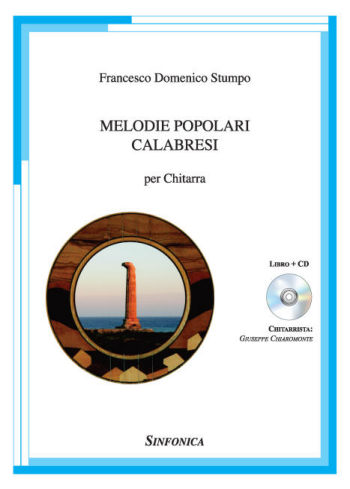
Review of Melodie Popolari Calabresi per Chitarra by Francesco Domenico Stumpo, Sinfonica, 2015

Edizioni Musicali Sinfonica realizes this book of musics by the composer Francesco Domenico Stumpo, accompanied by the recording on CD of the same music by the italian guitarist Giuseppe Chiaramonte.
Maestro Stumpo is not new about creating scores for guitar bound to the Calabrian tradition, having already released the song Dance with Calaraba for the anthology called "Dusan Bogdanovic presents" for the italian publisher Carish. In this book / CD he presents this collection of eight songs, all with characteristics linked to the popular tradition of Calabria. As written by the composer in the introduction the purpose of these passages is to give an educational value and to present Calabrian musical tradition and guitar. The guitar is present in the regional tradition in the form of ""chitarra battente" and French (acoustic) guitar and so in this context, the classical guitar lends itself easily into a crossover role, or better, of a cultural bridge between a popular tradition and a form linked to the academic tradition -classica.It seems to me that in this sense the music of Francesco Domenico Stumpo have not failed to seize and realize this ideal transition avoiding the risk of falling into a formal trivialization and crystallization of structures related to a popular clichés and a predominantly oral tradition and free from rigid defined structures .
These scores, of intermediate difficulty level, have been fingered and recorded by Giuseppe Chiaramonte allowing even the simple amateur to venture himself in execution confronting, listening to and  immediately finding an easier fulfillment in his study.Often contemporary composers have locked them selves in their ivory towers, considering themselves the only guardians and priests of the musical art, looking for a perfect self-indulgent and devoid of any content. I think that Maestro Stumpo's music goes to another direction: biology teaches us that hybrids are never an easy thing, but can give great satisfaction.

http://www.sinfonica.com/italian/risultati.php?cerca=chiaramonte

lunedì 10 agosto 2015

Recensione di Melodie Popolari Calabresi per Chitarra di Francesco Domenico Stumpo, Sinfonica, 2015


Le Edizioni Musicali Sinfonica realizzano questo libro di spartiti ad opera del compositore Francesco Domenico Stumpo, accompagnati dalla registrazione in cd delle stesse musiche da parte del chitarrista calabro-milanese Giuseppe Chiaramonte.
Il Maestro Stumpo non è nuovo alla realizzazione di spartiti per chitarra con tematiche improntate alla tradizione calabrese, avendo già pubblicato il brano Danza Calaraba nell'antologia con cd "Dusan Bogdanovic presents" per la casa editrice Carish. In questo libro/cd ci presenta questa raccolta di otto brani, tutti con caratteristiche legate alla tradizione popolare calabrese. Come scrive lo steso compositore nell'introduzione lo scopo di questi brani è quello di una valenza didattica e di divulgare la tradizione musicale calabrese per chitarra. La chitarra è presente nella tradizione regionale sotto forma di chitarra battente e francese (acustica) e quindi in questo ambito la chitarra classica si presta agevolmente nel ruolo di crossover, o meglio, di ponte culturale tra una tradizione popolare e una forma legata alla tradizione accademica-classica.
Mi sembra che in questo senso le musiche di Francesco Domenico Stumpo siano riuscite a cogliere e a realizzare questa ideale transizione senza il rischio di cadere in una formale banalizzazione e cristallizzazione di strutture che legate a una vulgata popolare e a una tradizione prevalentemente orale e libera da strutture rigidamente definite.
Gli spartiti, di livello di difficoltà intermedio, sono stati diteggiati e registrati da Giuseppe Chiaramonte permettendo anche al semplice dilettante di avventurarsi nell'esecuzione confrontandosi immediatamente nell'ascolto trovando un più facile appagamento nel loro studio.
Spesso e volentieri i compositori contemporanei si sono chiusi nella loro torre d'avorio ritenendosi gli unici custodi e sacerdoti dell'arte musicale, alla ricerca di una perfezione autoindulgente e vuota di ogni contenuto, le musiche del Maestro Stumpo mi sembra vadano in un'altra direzione: la biologia ci insegna che gli ibridi sono mai una cosa facile, ma possono dare grandi soddisfazioni.


mercoledì 24 giugno 2015

Giuseppe Chiaramonte in Concerto 27 giugno 2015


Sabato 27 giugno 2015 h. 18:30
MILANO - Basilica di S.Ambrogio / Antico Oratorio della Passione (piazza S. Ambrogio, Milano)
Recital solistico 
Musiche di Sanz, Scarlatti, Mertz, Barrios, Albèniz, Tarrega
Il programma verrà eseguito su chitarre del Liutaio Mario Grimaldi
                    ingresso libero e gratuito 

venerdì 15 maggio 2015

Giuseppe Chiaramonte in concerto


Mercoledì 20 maggio 2015 h.21:00
MILANO - Chiesa dell'Assunta in Vigentino (piazza dell'Assunta 1, Milano)
Esecuzione del concerto per Chitarra e Orchestra "Bosco Sacro" di Federico Biscione
Orchestra dell'Assunta diretta da Paolo Volta
Ambito: Stagione Orchestrale - Orchestra dell'Assunta, Concerto di Chiusura
http://www.orchestradellassunta.it/stag_2014-2015.php
Patrocinio: Padiglione Italia - EXPO MILANO 2015

Ingresso libero e gratuito

Domenica 21 giugno 2015 h.15:30
MILANO - Castello Sforzesco / Sale Panoramiche (piazza Castello, Milano)
Recital solistico 
Programma
Francis Poulenc (1899-1963): Sarabande
Federico Biscione (*1965): Sarabanda e Giga (prima esecuzione assoluta)
Isaac Albèniz (1860-1909): Asturias – Leyenda
Astor Piazzolla (1921-1992): Oblivion, La Muerte del Angel
Julia Malischnig (*1976): Tassilo im Himmel (prima esecuzione italiana)
Nikita Koshkin (*1956): Usher-Valse
Ambito: Expo in città: Le mani sapenti
Patrocinio EXPO MILANO 2015 e Fondazione Monzino
Il programma verrà eseguito su chitarre della Liutaia Silvia Zanchi


Sabato 27 giugno 2015 h. 19:00
MILANO - Basilica di S.Ambrogio / Antico Oratorio della Passione (piazza S. Ambrogio, Milano)
Recital solistico 
Musiche di Sanz, Scarlatti, Mertz, Albèniz, Tarrega
Ambito Expo in città 
Il programma verrà eseguito su chitarre del Liutaio Mario Grimaldi

mercoledì 7 gennaio 2015

Guitars Speak: la chitarra (live) di Giuseppe Chiaramonte


Download Podcast

Questa sera alle 21 in onda su Guitars Speak. La prima puntata del 2015 di Guitars Speak parla della chitarra classica di Giuseppe Chiaramonte. Innovatore della tecnica chitarristica, le sue performance sono sostenute da una qualità timbrica apprezzata da alcuni tra i maggiori esponenti mondiali della chitarra classica. Lo ascolteremo in alcuni suoi concerti e alcuni suoi brani recentemente registrati.


This evening at 9PM on air with Guitars Speak. The first 2015's episode of Guitars Speak radio program talks about by Giuseppe Chiaramonte's Classical Guitar . Guitar technique's innovator, his performances are supported by a tonal quality appreciated by some of the world's greatest exponents of the classical guitar. We will listen to him playing in some of his concerts, and some recently recorded new passages.

1. Un corposo estratto dal concerto del 26 ottobre 2014 a Casa Verdi -Milano.
Elenco Brani (eseguiti su chitarra Guadagnini 1827): 
Gaspar Sanz: Fuga al ayre espanol
Domenico Scarlatti: Sonata k208
Johann Kaspar Mertz: Elegia
Johann Kaspar Mertz: Le Gondolier op.65
Mauro Giuliani: Variazioni sul tema della Follia di Spagna op. 45

2. - 3.  Due brani del compositore calabrese Francesco Domenico Stumpo, Calabrian Waltz e Ninninciola, incisi, insieme ad altri 6 brani dello stesso autore, da Giuseppe Chiaramonte per l'etichetta milanese Sinfonica.

4. Rain story è un brano breve ma carico di significato della compositrice russa Anna Inozemceva, vincitrice di numerosi concorsi internazionali, docente all'università statale della cultura e delle arti di Mosca e membro del Russian Guitar Quartet. 

5. Un dia de Novembre di Leo Brouwer, registrato a Tricase (prov. di Lecce) con una chitarra del Liutaio Giovanni Arbace.

6.  Recuerdos de la Alhambra di Tarrega, recentemente registrato dal vivo presso il laboratorio del liutaio Mario Grimaldi, con una chitarra Grimaldi

http://radiovocedellasperanza.it/

martedì 18 novembre 2014

Giuseppe Chiaramonte's playlist on Blog Chitarra e Dintorni


Born in Italy in 1985, Giuseppe Chiaramonte debuted as a classical guitar concert artist at the age of 15 and has performed many concerts throughout Italy and Germany, meeting with a notable audience and critical success everywhere he has played. 
Among these, he played as solo at the prestigious International Guitar Festival "Brescia Chitarra", at the International Music Festival “Infinitamusica”, at the International Festival Gitarrentage Vaihingen (Germany) and with the Microkosmos Orchestra at Museo Diocesano in Milan. He debuted in Berlin in May 2014 at KunstSalon Maja & Friends and he performed a successful solo recital in the "Giuseppe Verdi" concert hall in Casa Verdi  in Milan, in October 2014, with a Romantic repertoire played on an original Gaetano Guadagnini guitar (Torino 1827). 
Invited in special radio programs dedicated to him, he performed a series of solo concerts with live radio broadcast.
As a winner of the "Sony Classical Talent Scout", his interpretation of Johann Kaspart Mertz's Elegie, live recorded during Sony Talent Scout at the Madesimo Music Festival 2013, will be included in a compilation-CD by SONY CLASSICAL label. 

http://www.giuseppechiaramonte.it/


venerdì 19 settembre 2014

Giuseppe Chiaramonte interviewed by Alida Altemburg


Born in Italy in 1985, Giuseppe Chiaramonte debuted as a classical guitar concert artist at the age of 15 and has performed many concerts throughout Italy, meeting with a notable audience and critical success everywhere he has played. 
Among these, he played as solo at the prestigious International Guitar Festival “Brescia Chitarra”, at the International Music Festival “Infinitamusica”,  and with the Microkosmos Orchestra at Museo Diocesano in Milan.

Here he is interviewed by Alida Altenburg.

Hello Giuseppe, I would like to thank you to be here with me in this space! In this period you held many concerts and recorded an album. Would you like to tell me more about your last tour?
In my last concert tour I was involved in Milan, Berlin and Lecce. In Milan, during a hand-made-guitar exhibition , it was a very informal concert, one of those where people interact with you between a piece and another, and maybe even make you some (unlikely!) repertoire request! At the end of the performance a very good guitarist has approached asking for lessons with me (it’s one of the most beautiful things that can happen to you at the end of a performance!) and now he is already a student of mine. The Berlin concert was focused on Spanish music, it was held  at a prestigious and elegant KunstSalon, and that is what I consider my real international debut ... it continues on:


venerdì 12 settembre 2014

Giuseppe Chiaramonte: Corso Annuale di Perfezionamento per Chitarra Classica a Milano


Corso annuale di perfezionamento per Chitarra Classica a Milano
terza edizione
Docente: GIUSEPPE CHIARAMONTE
Ottobre 2014 - Giugno 2015
per info e iscrizioni: 

domenica 24 agosto 2014

Intervista a Tommaso Ieva di Giuseppe Chiaramonte


GIUSEPPE CHIARAMONTE 
Iniziamo da lontano. Tu sei nato in Germania e lì hai vissuto per la maggior parte del tempo, a parte una parentesi di alcuni anni in Italia, dove hai ricevuto una prima e importante formazione musicale. Musicalmente (ma non solo) parlando, ti manca l’Italia? Pensi di tornare un giorno? 

TOMMASO IEVA
Dunque, dal 1985 al 1995 ho vissuto in Italia, dove ho ricevuto la mia prima formazione in chitarra classica presso l'associazione “Amici della musica” di Andria, ho goduto di una preparazione molto solida e “classica” che si concentrava su una preparazione fedelmente orientata al vecchio ordinamento vigente presso il conservatorio di Bari. L'Italia è relativamente vicina dal punto di vista geografico, mi mancano ovviamente tantissime cose tra cui i legami indelebili con la mia radice culturale nonché patria e madrelingua, ma per fortuna ho spesso la possibilità di rientrare per brevi periodi, pertanto riesco in parte a colmare la mancanza. E' difficile affermare di poter rientrare in via definitiva, in quanto esiste attualmente una situazione particolarmente proibitiva un po’ per tutti i giovani, l'auspicio è di ritrovare un giorno un tragitto percorribile, anche se devo ammettere che non è facile intravederne una realizzazione.

G.C. 
Si sente spesso dire che l’Italia non è un paese per musicisti, per tutta una serie di motivi. Cosa ci dici della Germania? 

T.I.
Parlando dell'Italia credo che tutti siano concordi nell'affermare che si tratti di un Paese che in passato (come ancora oggi) ha saputo dare un'indelebile traccia ed un notevole apporto nella divulgazione e sviluppo di tutte le arti, spiccano di epoca in epoca i grandi maestri, partendo da quelli rinascimentali, fino a giungere a quelli contemporanei. Secondo me il nocciolo della questione è che la nostra condizione attuale è una condizione poco agiata a causa di un ambiente difficile. A rendere le cose ulteriormente complicate è il dato di fatto che in altri campi professionali è magari meno arduo ed estenuante affermarsi e guadagnarsi da vivere. Il problema maggiore è la scarsa valorizzazione dei nostri talenti, spesso si assiste alla commercializzazione e divulgazione di tutto ciò che è immediato e passeggero, forse è nel nostro “Zeitgeist”, come direbbero i tedeschi, negare al musicista di classe emergente quel sostegno a volte determinante; a mancare è soprattutto un “Leitmotiv” che potrebbe spingere i più dotati verso indelebili orizzonti, raggiunti dai nostri avi. E' una questione legata alla mentalità contemporanea di fondo e con ogni certezza anche alla mancanza di una rete strutturale ed istituzionale pronta ad investire in una elevata qualità formativa, non contribuendo in maniera sufficiente a creare le premesse per un risvolto professionale duraturo e stabile. Si finisce quindi nella rete della precarietà che soffoca tanti talenti sul nascere. La Germania è dotata di una politica giovanile protesa ad investire, la mentalità consiste nel fornire servizi sempre più competitivi;  esiste pertanto, vicino al settore industriale trainante, una possibilità, per il campo artistico-culturale, di funzionare. Ne scaturiscono tante opportunità dove è sicuramente possibile portare avanti progetti importanti. Le istituzioni forniscono possibilità anche se non posso negare che sono subentrate restrizioni anche qui negli ultimi tempi.


G.C.
Nella nostra ultima chiacchierata mi dicevi che come docente hai tantissime richieste, suppongo che ci sia una particolare sensibilità da parte delle famiglie, delle istituzioni etc. verso la didattica musicale. Nel contempo tu sei un concertista, registri dischi e organizzi da qualche anno un importante Festival Internazionale a Vaihingen (Gitarrentage Vaihingen), di cui parleremo dopo. Come riesci a conciliare tutti questi impegni e, soprattutto, se dovessi ordinare per priorità le tue attività di docente, organizzatore di eventi, concertista, quale sarebbe quest’ordine?

T.I.
A volte mi pongo la stessa domanda, analizzando la mole di lavoro scaturita ed assolta nel corso di un anno di lavoro, rivisitando tutti i compiti svolti , riflettendoci mi rendo conto delle proporzioni ciclopiche che comporta il coordinamento di questi ambiti che comunque hanno una peculiarità in comune, dato che da un certo punto di vista si correlano e completano tra loro. Credo sia possibile conciliarli attraverso la tenacia, il duro lavoro, la determinazione nel riuscire a portare tutti i compiti al termine, la forza di volontà e soprattutto la pianificazione immediata ed attenta. Certo, gestire e portare a termine un festival intero, dove oltre a dirigere, pianificare, eseguire un concerto al contempo ho svolto compiti amministrativi, devo ammettere è un compito tutt'ora non facile, tuttavia di fatto ad oggi siamo giunti alla 4a edizione che attesta la risolutezza con cui è stata pianificata ogni stagione ed edizione dello stesso. Alla fine contano i fatti e le ottime recensioni ricevute che ricaricano di energia positiva il festival dotato di un'atmosfera più unica che rara. Al di là di qualsiasi cosa che a seguito di una maggiore esperienza possa ancora crescere, il festival sembra essere partito collocandosi tra gli eventi culturali di spicco e maggior apporto internazionale siti nella cittadina di Vaihingen. E' sicuramente come uno dei più innovativi nel panorama chitarristico internazionale che riesce a coinvolgere chitarristi provenienti da tutti i continenti.
Conciliare e correlare tra loro queste attività è stato da sempre un sogno, posso affermare di aver saputo avverare in una parte della mia vita questi tre campi quasi in conflitto tra loro, non vorrei dare un ordine prioritario a l'una o l'altra attività svolta. Ma sono convinto che esse siano correlate tra loro da un vincolo che le intreccia a volte favorendole, a volte portandole in contrapposizione tra loro, ma esse si incontrano, si mescolano dando vita ad unicum di straordinaria vitalità ed intensità. L'attività pedagogica con allievi di tutte i ranghi, come i concerti in Italia e fuori ed il costante scambio e lavoro di collaborazione, organizzazione e contatto con i colleghi hanno fruttato risultati interessanti, producendo nuove opportunità condivise e apprezzate da tanti.  


G.C.
Come esecutore hai un repertorio che spazia dalla musica rinascimentale alla musica contemporanea, ma vorrei sottolineare soprattutto l’importanza che dai alle trascrizioni, per le quali proponi un taglio molto personale, con l’utilizzo anche di effetti ricercati sulla chitarra classica che stanno avendo un bel successo tra il pubblico e tra i colleghi chitarristi. Vuoi fare qualche esempio?

T.I.
Sicuramente è la trascrizione di “Libertango”,  unica nel suo genere per come è stata ideata, che ha da sempre riscontrato il plauso da parte di pubblico e colleghi. Nella stessa ho applicato una tecnica ibrida a cavallo tra percussione della mano destra e percussioni della mano sinistra che nel contempo tracciano anche il ritmo armonico. E' questa miscela semplice ed efficace  a rendere il brano interessante, mi auguro che presto sarà possibile ascoltarlo su Youtube ed inoltre ho deciso di pubblicarne una trascrizione sul mio sito Web in allestimento anche se qui dovrò, prima ancora di affermarlo con certezza, accordarmi con la Curci G.m.b.H. e la GEMA di Berlino, che in collegamento con Milano ha il potere di dare il via libera. Un altro aspetto interessante è che nello stesso brano esiste una sezione intermedia di cui io stesso ne sono scrittore in sintonia con tutta Libertango, questa parte apporta un ampliamento interessante e discreto che non ne sconvolge la stesura originale, rispettando la scrittura di A. Piazzolla e rendendola una trascrizione unica con un'impronta del tutto personale ed originale.

G.C.
Sta per uscire un tuo disco dal titolo “La Catedral”. Vuoi darci delle anticipazioni sulla scelta del repertorio, la scelta del titolo...? Vogliamo incuriosire i nostri lettori…

T.I.
Il mio primo lavoro che sarà pubblicato in autunno. Il CD è uno spaccato di diverse epoche. Partendo dall'epoca rinascimentale giungerò fino alla musica contemporanea. Ho deciso di intitolarlo "La Catedral“ in omaggio ad Augustine Barrios, la cui morte ricorre 70 anni fa. Ci saranno alcuni pezzi molto interessanti di Dowland, poi Narvaez, Rodrigo, Tarrega, Stepan Rak e tanti altri ancora …
Il CD e' nato durante diverse fasi. E‘ interessante perché varia molto anche dal punto di vista del suono; ho utilizzato diverse soluzioni timbriche adoperando il capotasto, usando diverse chitarre ...

G.C.  
Che strumenti usi solitamente per le tue performance? Quali sono gli strumenti che preferisci? Usi gli stesso strumenti per registrare e per suonare dal vivo? Mi parlavi anche di una fedele riproduzione di una Stauffer del periodo romantico con la quale suonare il repertorio della prima metà del XIX secolo, hai già delle registrazioni con questo strumento?

T.I.
Di solito uso una chitarra Stauffer nella parte iniziale, che adopero anche per la musica antica, il suono si presta molto bene anche per dare un carattere più autentico alla musica rinascimentale, ad esempio, una sorpresa!, cosa che non avevo minimamente tenuto in considerazione quando ordinai lo strumento, infatti credevo di usarla solo ed esclusivamente per suonare compositori romantici, finché riscontrai che il suono è davvero molto più „universale“ di quanto si possa immaginare. Altrimenti ho strumenti tedeschi innovativi come ad esempio una chitarra costruita da Carl Herrmann Schaefer, di cui spicca molto sia la volumetria che la rotondità del suono. Ho inoltre una chitarra tradizionale che si rifà a Torres, costruita da Nikola Minev, molto bella, le cui timbriche sono particolarmente indicate per l'interpretazione di Tarrega e compositori dell‘epoca tardo romantica spagnola oltre che quelli del novecento storico nostrano.


G.C. 
Cambiamo argomento, e parliamo finalmente del Festival Internazionale Gitarrentage Vaihingen. Ho dato uno sguardo al programma del 2014 e agli artisti presenti e devo dire che è veramente notevole da tutti i punti di vista. C’è spazio per giovani esordienti così come per chitarristi affermati, ci sono numerosi concerti, conferenze e masterclass, e via dicendo. E poi c’è  spazio per diversi generi musicali (classica, flamenco, jazz…). Un festival a 360 gradi insomma.  Ma lascerei la parola a te. Vuoi parlarci di come è nato questo evento? Com’è la risposta della gente e delle istituzioni di Vaihingen e dintorni? E, in particolare, quali sono le novità dell’edizione di quest’anno, dove avrò l’onore di partecipare anche io?

T.I.
Nel 2010 suonai su invito del direttore di una delle scuole dove iniziai la mia attività di insegnante, nella chiesa ormai sconsacrata ed adibita a sala auditorium di Vaihingen, notai immediatamente le eccellenti qualità acustiche di cui essa era dotata. Ricordando l'esperienza di altri festival frequentati a Nuertingen, Wetzlar oppure Darmstadt mi venne in mente l'idea di provare a condividere le potenzialità della sala con altri chitarristi, non immaginando ancora che da lì avrei addirittura creato le premesse per un festival il cui risvolto e la cui crescita hanno ad oggi contribuito a dare spazio sia ai giovani ( vedasi Jugendgitarrenorchester Baden Wuerrtemberg ), che ai chitarristi affermati, come ad esempio Heike Matthiesen, Giulio Tampalini, Stefan Hladek, oppure giovani talenti ormai affermati come ad esempio David Dyakov, Francesco Teopini, Antonio Malinconico e tantissimi altri ancora che non sto qui ad elencare perché basta consultare il mio sito: http://gitarrentagevaihingenenz.jimdo.com/.
Ho creato il festival per dare spazio e rilievo a tutti. Una particolare attenzione rivolgo ai giovani chitarristi dotati in cerca di una seria possibilità di esibirsi. Ho fatto del mio meglio per creare sinergie con realtà locali, ma ho anche coinvolto artisti provenienti da tanti paesi diversi, così facendo abbiamo avuto ad oggi (e siamo giunti soltanto alla quarta edizione) chitarristi provenienti da ogni dove. E non soltanto chitarristi, anche
percussionisti, ballerine, cantanti, violinisti e cosi via, dato che la musica cameristica con la chitarra trova sempre un posto di rilievo nelle diverse edizioni.  La gente è man mano aumentata di edizione in edizione e a oggi abbiamo riscontrato un ottimo supporto grazie soprattutto alla gentile attenzione e sensibilità del
comune di Vaihingen an der Enz.
L'edizione di quest'anno vedrà diverse novità, ci saranno di nuovo diversi corsi, un congresso per l'esposizione di strumenti storici e contemporanei, un congresso con le chitarre appena forgiate condotto appunto da Giuseppe Chiaramonte, Masterclass sia per l'interpretazione di musica antica (con il supporto della liutista Sigrun Richter) che moderna, grazie a Stefan Hladek e tanti altri.
Inoltre il programma sarà arrichito di musica flamenco, Fingerstyle e Jazz grazie alla partecipazione di Afra Rubino Malmstroem da Goteborg ( Svezia ), Ray Sandoval (Londra ) e David Lindorf ( Austria ). Sta a voi non perdervi quest'evento !      

G.C. 
Parliamo un po’ dei tuoi progetti futuri. So che stai già pensando all’edizione del festival dell’autunno 2015! E so che stai già lavorando su un nuovo CD, completamente diverso… possiamo avere qualche anteprima per i lettori del nostro Blog? 

T.I.
Il mio prossimo lavoro discografico si baserà su musiche di J.S. Bach, J.K. Mertz, Giulio Regondi, C. Domeniconi. In questo disco la chitarra Stauffer, ora ancora in una fase di “rodaggio”, godrà di una particolare applicazione con uso di corde in Nylgut …

G.C.  
Tommaso, ti ringrazio a nome di tutto lo Staff del Blog Chitarra e Dintorni Nuove Musiche per la tua disponibilità e sarai sempre il benvenuto se vorrai condividere con noi i tuoi progetti e i tuoi eventi futuri. Una piccola anticipazione per i lettori del Blog… potrete ascoltare Tommaso Ieva dal vivo in Italia a Brescia nel mese di settembre 2014… non mancheremo di segnalarvi tutti i dettagli appena saranno in nostro possesso!  


lunedì 4 agosto 2014

Interview with Julia Malischnig by Giuseppe Chiaramonte, made in June 2010


GIUSEPPE CHIARAMONTE: Some guitarists start studying guitar pushed by an innate passion, some others thanks to their curiosity, others are encouraged by their parents... how did you start studying guitar?

JULIA MALISCHNIG: I fell in love with guitar when I was 3 years old…
It was on a cold winter day… I was walking with my parents through the snow into the city where my mum wanted to buy me a snow shovel to play in the snow.
Suddenly I saw this little guitar in a shop window. The snow shovel was no longer of any interest, I had fallen in love with this guitar at first sight and wanted to have nothing else than that.
So…since then this special love has been lasting…


G.C.: At what age did you realize that the guitar would become a key part of your life?

J.M.: Very soon…I think I was about 12 when I knew that guitar would always be with me, becoming my profession. Thanks to my wonderful first teacher Barbara Dietrich at the music school Spittal I got to know the world of guitar very soon. When I was eight I already got the chance to participate in masterclasses with Pepe Romero. He definitely was my very early key teacher – a very important person who himself speaks through the love for his guitar. With this amazing feeling I got my first lessons by him, learning how to touch and feel the string and how to be connected with my instrument.
The key part of my musical life is lying in my childhood, my wonderful teacher and the always very natural and caring way of my musical education.


G.C.: Among the others, you studied with two of the most important Italian guitarists, Oscar Ghiglia and Aniello Desiderio. How much those experiences were important for you?

J.M.: Both have been very important, each one in a different way.
When I saw Aniello Desiderio live in concert for the first time, this was a very special and intense musical moment for me. Never before had heard someone play like him…so that gave me a huge portion of motivation and new vision for my further studying time.
With Oscar Ghiglia I studied one year in Basel at the music academy and also at music academy Chigiana in Siena. He opened new sound dimensions for me, made me aware of myself and how to bring out my very own sound of me and my guitar.
G.C.: You have given concerts in different continents. What is the concert hall you have appreciated more? And where did you meet the most hearty public?
I have been playing in many places. Big halls, small rooms, holy places…each place is unique.
I will always feel differently in every place I will be and so me and my music will always sound differently as well.
The Philharmony of Kiev, Ukraine was very special to me. Beautiful hall with very fine acoustics.
The audience really touched me that night. And the next day a new piece came out of my guitar…it’s called “Kiev Meditation” and will be the bonus track on my City of dreams CD1.
About the most warm hearted public it is difficult to say…audiences are very different everywhere…each concert is different and unique and so is its audience…public in South Africa is amazing warm hearted …but you can find them everywhere…if you just let your heart speak through music.


G.C.: Where and when are you going to play next?

J.M.: Main event in August 2010 is La Guitarra esencial and my CD Presentation there. After that will play some more CD presentation concerts with my group in Carinthia and Vienna. Several solo concerts presenting my new music will be followed in September in Granada, Spain, in Oct. at a Guitar Festival in Bulgaria, Nov. at the German Guitar Festival “Saitensprünge” and after that at The Wroclaw Guitar Festival in Polen…so will be touring with my ´City of Dreams` through all different cities.

G.C.: What is your preferred repertoire? Who is your favorite composer?

J.M.: As I have started to write my own music too, my present repertoire now integrates many of my own pieces. Still there are a lot of other compositions which I love to play such as Argentinean tangos or both music from the past and presence.
My favourite composer is Ralph Towner, whom I admire for his high art and honest music.


G.C.: You are also a composer. I think this is not common in today’s interpreters. Please, tell us something about your pieces.

J.M.: My first composition for solo guitar called La Marcha de los Pinguinos occured completely unexpectedly for me and all of a sudden while I was on a concert tour in Argentina.
Each of my compositions has a story behind…my music always arises spontaneously based on some emotional experience or deep moment that has touched me.
In my concerts I am telling the story behind my compositions to the audience, communicating and sharing with and through my music.

G.C.: Few questions about “La guitarra esencial”. You are the initiator and artistic director of this important International Guitar Festival in Millstatt, south of Austria. Why did you choose this location? Why this title?

J.M.: La Guitarra esencial …the art of guitar. The guitar as the essence of music and the importance of guitar within the world of music – that’s all metaphorically included in this name. My aim is to develop and bring the guitar to another level…where it is no longer of importance of any style or form, whether classical, or jazz or flamenco or world music – it’s the art of music what La Guitarra esencial is standing for.
Millstatt is located in my home town area, it’s a beautiful place at a beautiful lake, it is both peaceful and
pristine and just the perfect place for music and art. So I chose “my home” as location of La Guitarra esencial, to offer a very special festival with special artists and outstanding art to the audience and people of my country.
Millstatt is a small village not a city, and the people here really appreciate and support a cultural quality like this.
Sometimes a village can become a city…sometimes a vision can be stronger than anything else.
I have composed one song on that – my hymn to Millstatt called City of Dreams - becoming both title of my musical project and CD
.

G.C.: The next edition of the festival will take place this summer in Millstatt. What is new this year?

J.M.: La Guitarra esencial Festival is becoming more and more a highly considered international guitar and music festival, where the guitar is always the main instrument within the huge variety of music.
World famous Argentinean bandoneon-virtuoso and composer Dino Saluzzi will open this year’s festival together with his family group, his son José on guitar and brother Felix on saxophone and clarinet – and me joining them as special guest.
The exceptional MGT Trio - 3 guitar heroes of 3 nations- Wolfgang Muthspiel, Slava Grigoryan and Ralph Towner will present their music “From a dream”.
Australians finest guitar duo – Slava and Leonard Grigoryan will perform, as well as Austrian’s classical guitar virtuoso Alexander Swete.
The amazing German guitar & Voice Duo Friend’n Fellow will be there, Austrian’s well known vocal coach Ali Gaggl will offer a vocal workshop to all festival participants, guitar workshops and masterclasses with Wolfgang Muthspiel, Alexander Swete, the Grigoryan Brothers and myself, rhythm and body & music workshops with percussionist Luis Ribeiro and tap dance lady Sabine Hasicka …and so much more.
A really impressive program with great international artists will be waiting for all of you to come to La Guitarra esencial from 4. - 8. August 2010 in Millstatt.

G.C.: Could you reveal something about your new project, the double CD “City of dreams” coming this August, in advance?

J.M.: ´City of Dreams` will be released at La Guitarra esencial Festival on 7.8.2010 in Millstatt.
I guess it’s a rare thing that has ever happened, a double album by a classical guitarist …revealing my own compositions a.o. for guitar, recording solo, duo, with bass and tap dance.
Plus offering a second CD where the guitarist turns into a singer…revealing my own songs, with my own lyrics and some favourite songs.
´City of Dreams` is music somewhere between the lines and can’t be put in any category.
I am speaking my own music, music of many worlds, with my own speech in different languages and colours.
I love sounds and colours, and I love to choose them. I love words and I love to use them. I love my guitar and I love to use my voice.
So I did both. Recording and showing my musical development of these years on 2 CDs.
I can say my music is honest and pure and it is always telling some stories behind.
Of dreams, visions and hopes…
…Every moment can change
Your vision your believe
Every smile you give or get
Will paint a memory in your heart
Becoming melody of your dream…

G.C.: Thank you so much, Julia.


martedì 8 luglio 2014

Giuseppe Chiaramonte: Etude 5 (Brouwer)

http://giuseppechiaramonte.it 

Giuseppe Chiaramonte in concerto in favore dei Bimbi del Madagascar, organizzato da "Bimbi del Madagascar Onlus", 29 Marzo 2008, teatro di Crespi D' Adda, Bergamo. / VIDEO PRODUCTION: Erika Ponti

venerdì 2 maggio 2014

Interview with by Natália Filová by Giuseppe Chiaramonte


Giuseppe Chiaramonte
Some guitarists start studying guitar pushed by an innate passion, some others thanks to their curiosity, others are encouraged by their parents... how did you start studying guitar?

Natália Filová
I came close to the guitar and music in general through my father. He was a bassguitar player in rock band. In the beginning he taught me basic chords through which I learned first famous songs. He had a familiar friend who started to teach me notes and classical guitar technic, shortly thereafter I started at the elementary schools of art. That was the beginning where I began to feel a strong passion for the guitar.

Giuseppe Chiaramonte
Are you still used to publically perform also as a solo guitarist? Which is your preferred solo guitar repertoire?

Natália Filová
Yes, but not frequently. I love to play at events, where I can meet with other kinds of art, like exibitions or poetry readings etc.

Giuseppe Chiaramonte
Who is your favorite composer?

Natália Filová
I like a number of composers, not only composers who wrote for guitar. I am fascinated by music era of Impressionism, Spanish folk music. I try to find new music that can raise the beauty of guitar and the colours of the sound, therefore one of my favorite composers is for example Eduardo Sainz de la Maza.


Giuseppe Chiaramonte
Do you play also with other musicians that are not member of guitArtistas?

Natália Filová
I am currently a full-time member of guitArtistas. I play occasionally with my colleagues from school. Find your ideal partners in a relationship but also for music cooperation is not really easy Concerts and competitions with the girls are always full of unexpected funny moments, a grateful audience, sharing beautiful music therefore I always give everything I can.

Giuseppe Chiaramonte
Let’s imagine you have to play with another (others) musician (musicians) which is not a member of guitArtistas, let’s say, another ensemble with guitar(s) and other(s) instrument(s). Just imagine how guitar timbers could be combined with other instruments (no limit of number of instruments). Other then the quartet (of course!) which ensemble with guitar could be the best, in your opinion?

Natália Filová
Of course the various projects often need different players so I can imagine various combinations. I like e.g. the famous ensemble „L'Arpegiata“: They play on historical Instruments but I think that something similar could be formed from modern instruments. In my opinion one of the finest connection is guitar and voice (alto, mezzo-soprano), because of it‘s very natural sound.


Giuseppe Chiaramonte
Other than the guitar, what are your other interests? How do you like to spend your free time?

Natália Filová

In my free time I love to calm down, just to read a good book. I obtain energy from walking in nature often all by myself, with a friend or my dog. I always got a camera for capture the interestings moments around me in my pocket. Listening to music on a good concert and glass of wine with good friends is the ideal evening for me. 


martedì 29 aprile 2014

Interview with Eva Langöcker by Giuseppe Chiaramonte


Giuseppe Chiaramonte 
Some guitarists start studying guitar pushed by an innate passion, some others thanks to their curiosity, others are encouraged by their parents... how did you start studying guitar?

Eva Langöcker
I started to play the guitar with the age of nine and after six years my teacher pushed me to begin studying guitar, so I decided to study guitar at the Conservatory in Vienna for about twelve years after having finished the music school.  In the last two years of my studies there, I also attended  a postgraduate course at the University of Vienna.

Giuseppe Chiaramonte  
Are you still used to publically perform also as a solo guitarist? Which is your preferred solo guitar repertoire? 

Eva Langöcker
       Sometimes I play some readings, I love to play baroque music especially Bach, and also Spanish music for example F.M. Torroba or F. Tarregá.

Giuseppe Chiaramonte  
Who is your favorite composer? 


Eva Langöcker
       As I already said my favorite composer is Johannes Sebastian Bach.

Giuseppe Chiaramonte 
Do you play also with other musicians that are not member of guitArtistas?

Eva Langöcker
        I learned to play the saxophone two years ago and since then I am part of a Big Band. Unfortunately I have not more time to take part in other ensembles, because I teach in different schools five days a week.

Giuseppe Chiaramonte 
Let’s imagine you have to play with another (others) musician (musicians) which is not a member of guitArtistas, let’s say, another ensemble with guitar(s) and other(s) instrument(s). Just imagine how guitar timbers could be combined with other instruments (no limit  of number of instruments). Other then the quartet (of course!)  which ensemble with guitar could be the best, in your opinion? 

Eva Langöcker
       This is a very difficult question because I think that the quartet is the best ensemble for guitar, because you can also play orchestra music and jazz arrangements. It is quite difficult to organize more than four guitar players in regards to rehearsals and other administrative things.

Giuseppe Chiaramonte 
Other than the guitar, what are your other interests? How do you like to spend your free time?

Eva Langöcker
As I said before I love to play the saxophone and I go jogging every day. I also like to visit friends and of course I love shopping. 


lunedì 28 aprile 2014

Interview with Andrea Wild by Giuseppe Chiaramonte


Giuseppe Chiaramonte
Some guitarists start studying guitar pushed by an innate passion, some others thanks to their curiosity, others are encouraged by their parents... how did you start studying guitar?

Andrea Wild
My parents used to listen to a classical radio station every sunday at lunch and there was had kind of a ‘ranking’ during that time. Joaquin Rodrigo’s ‘Concerto Andaluz’ was in the first place for a few weeks and I really fell in love with that piece - so I decided to study guitar. A lot of other people told me that I was too young – but they were wrong…

Giuseppe Chiaramonte
Are you still used to publically perform also as a solo guitarist? Which is your preferred solo guitar repertoire?

Andrea Wild
Of course I also perform as a solo guitarist – but to be honest: I prefer to play with the girls. At the moment, my favourite pieces are ‘Invocacíon y danza’ by Joaquin Rodrigo, Sor’s ‘Grand Solo op. 14’ and ‘Koyunbaba op. 19’ by Carlo Domeniconi. In general I love to play Spanish Music of every epoche and classical pieces.

Giuseppe Chiaramonte
Who is your favorite composer?

Andrea Wild
This is a VERY difficult question!! My first thoughts are Joaquin Rodrigo and Niccoló Paganini, but there are so much more composers, like e.g. Astor Piazzolla and Joaquin Turina – so I fear I cannot make a decision!

Giuseppe Chiaramonte
Do you play also with other musician that are not member of guitArtistas?

Andrea Wild
I am also part of a tango-group called ‘Cosmopolytango’, which is composed of violin, double bass, vibraphone and guitar.
In addition to that I am the front singer of a jazzband and sometimes I also use to play in a string-quartet (I also studied violoncello when I was a child).

Giuseppe Chiaramonte
Let’s imagine you have to play with another (others) musician (musicians) which is not a member of guitArtistas, let’s say, another ensemble with guitar(s) and other(s) instrument(s). Just imagine how guitar timbers could be combined with other instruments (no limit of number of instruments). Other then the quartet (of course!) which ensemble with guitar could be the best, in your opinion?

Andrea Wild
If I could choose an ensemble to play with (another one than guitartistas) I would like to play in the ‘Janoska Ensemble’, ‘Mnozil Brass’ or with Erwin Schrott and his ‘Rojotango group’.


Giuseppe Chiaramonte
You already arranged some compositions for the quartet. Are you working on new transcriptions?

Andrea Wild
Yes, I already work on two new transcriptions – but that’s a secret so far ;-)

Giuseppe Chiaramonte
You did CD recordings in the past. Please, give us more details.

Andrea Wild
When I was a teenager, I won an Austrian competition playing i.a. a completely new piece by Kurt Schwertsik. Afterwards I was invited to record this beautiful piece for a CD (contemporary music) in the ORF (Austrian TV). You can imagine - this was a quite big thing for me!

Giuseppe Chiaramonte
Other than the guitar, what are your other interests? How do you like to spend your free time?

Andrea Wild

In my free time I like to do horse-riding and to spend time with my family and friends, like all girls I also love to go for shopping and dancing in the night. In addition to that I am a fan of Udinese Calcio and the Green Bay Packers (American football).