giovedì 20 agosto 2015

"FORUM GITARRE WIEN 2015" Konzerte / 24. - 30. Aug


25 JAHRE

"FORUM GITARRE WIEN 2015"

24. – 30. Aug.
Großer Ehrbarsaal, Mühlgasse 30, 1040 Wien

KARTENVORVERKAUF:
Musikhaus Georg Haid, Alserstrasse 36, 1090 Wien, 405 34 59, oeticket: www.oeticket.com 01 96096
INFO /RESERVIERUNGEN: +43 (0)676 75 75 646
office@forum-gitarre.at          http://www.forum-gitarre.at
--------------------------------------------------------------------------------------------------

ABENDKONZERTE

Mo. 24. 8.       Eröffnungskonzert:
19:30               Alecu         Ciapi
                    Margarita           Escarpa                 
Werke von Bach, Rodrigo, Barrios, Tedesco, Aguado, Sor, Debussy
                                                            Di.   25. 8.       Doppelkonzert:                 
19.30               Paul Galbraith
Duo Zsapka Flöte und Gitarre
Werke von Mozart, Bach, Ravel, Pujol, Doppler, Almeida

Mi.  26. 8.       Carlo Marchione                                          
19.30               Werke von Molitor, Rebay, Giuliani, Vassiliev

Do.  27. 8.       Andrea de Vitis                                               
19.30               Werke von Tedesco, Tansman, Rodrigo, Mertz, Tarrega       
                                            Fr.   28. 8.       Marcin Dylla                      
19.30               Werke von Ponce, Vasks, Diabelli, Tansmann, Sierra

Sa.  29. 8.        Alvaro  Pierri                         
19:30               Werke von Piazzolla, Gnatalli, Anido, Bogdanovic, Nobre
           
So. 30. 8.         FINALE  20. Internationaler Wettbewerb „FORUM GITARRE WIEN 2015“
18.30
 
NACHMITTAGSKONZERTE (Eintritt frei)

Di.  25. 8.      Jure Cerkovnik                                                    
15:00             Werke von Sor, Barrios, Ponce, Cagali
                              
Mi. 26. 8.        Doppelkonzert:
15:00             Bozhana Pavlova                   
                        
Davide Tomasi 
                        Werke von Schubert, Bach, Henze, D´Angelo, Rodrigo, Sor, Scarlatti, Mertz
Mi. 27.8          Teilnehmerkonzert
16:00
 
VORTRÄGE
 
Carlo Marchione:       Fernando Sor Fantasie Elegiaque: Höhepunkt der Rhetorik in dem Gitarrenrepertoire
Michael Mc Meeken:          Anatomy of a music edition: „How do you know you are playing what the composer wrote?“
Daniel Zucali:              Die Entwicklung der Konzertgitarre: Entwicklung, Materialien, Konstruktionstechniken
Thomas Offermann:  D‘Addario „Hybrid Carbon sets“ und „Half sets“, Planet Waves Zubehör

NOTEN- & INSTRUMENTENAUSSTELLUNG 
(Eintritt frei)

NOTEN:               Haus der Musik Trekel, Guitarissimo
INSTRUMENTE: Masaki Sakurai, Hans-Peter Bamberger, Armin & Mario Gropp, Bernhard Kresse, Claudio Lazcano, Alain Raifort, Stefan Rössler, Donatella Salvato, Sato Guitars, Rumen Todorov, Curt Claus Voigt, Daniel Zucali

"Rassegna concerti del Baldo" - prima edizione


MARCO PACASSONI TRIO 
Sabato 22 Agosto, ore 20.45 - Brentonico, Palazzo E. Baisi

Marco Pacassoni: vibrafono
Lorenzo De Angeli: basso acustico
Matteo Pantaleoni: batteria

concerto
MOSAIKO ENSEMBLE
Mercoledì 26 Agosto, ore 20.45 - Mori, sala ex municipio

Lorenzo Marcolongo: clarinetto
Matteo Rigotti: chitarra

concerto
OLTRE DUO con EMILIO GALANTE
Sabato 5 settembre, ore 20.45 - Brentonico, Palazzo Baisi

Emilio Galante: flauto
Alessandro Bianchini: cajon, vibrafono
Mauro Tonolli: chitarra
Stefano Bianchini: contrabbasso
Samonati Thomas: batteria

masterclass
Incontro-lezione con MARCO PACASSONI
Sabato 22 Agosto, ore 16.00 - Brentonico, Palazzo E. Baisi
(Per informazioni e prenotazioni della masterclass 3497971618)

tutti i concerti sono ad entrata gratuita
Direttore artistico: Mauro Tonolli


mercoledì 19 agosto 2015

Recensione di "solos bimhuis" di Joe Morris, Relative Pitch Records LLC, 2015


Facciamo un po' di ordine:

- 1995 No Vertigo, Leo Records
- 2000 Singularity, AUM Fidelity
- 2015 solos bimhuis, Relative Pitch Records LLC

Tre dischi per solo chitarra, tre capolavori per un musicista geniale, innovativo e mai fermo sulle sue posizioni. Periodicamente, metodicamente Joe Morris prende la sua chitarra, rigorosamente acustica, e ne ricava un flusso di pensieri, idee, proposti in questo caso col suo ultimo cd "solo bimhuis" sotto forma di sei brani registrati il 18 ottobre 2013 e il 2 ottobre 2014 al Bimhuis in Amsterdam, struttura/teatro/luogo dedicato alla musica improvvisata con una storia che continua fin dal 1974.
Morris è probabilmente il chitarrista numero uno per quanto riguarda la chitarra free, con una produzione discografica semplicemente imponente di cui questi tre dischi in solo rappresentano, a mio avviso, la punta di un imponente e sommerso iceberg creativo. Ho sempre considerato come i dischi in solo come dei momenti molto particolari nella carriera di un musicista, momenti molti intimi e di assoluta libertà, dove poter suonare e agire senza i  compromessi che il suonare con altre persone necessariamente richiede. Nel caso di Morris la possibilità di ascoltarlo in tre diversi momenti con tre diversi cd permette di cogliere le sottili e costanti dinamiche evolutive che da sempre animano il suo desiderio di portarsi sempre sui confini, sulla frontiera di una musica in continua espansione e esplorazione. In questo "solos bimhuis" Morris preferisce esplorare strutture ritmiche complesse e discontinue con continue variazioni e cambi di tensione utilizzando le possibilità offerte dalla sua archtop acustica. Il risultato è un classico "clean sound" le cui variazioni non sono date dall'uso di effetti ma dal modo diretto con cui Morris interagisce col suo strumento. Quando semplicità è sinonimo di complessità. Molto bella la foto nella cover del cd.

domenica 16 agosto 2015

Andy Summers - Live in Montreal 1991 full concert on Blog Chitarra e Dintorni


Andrew James "Andy" Summers (born 31 December 1942) is an English musician, born in Poulton-le-Fylde, Lancashire. Best known as the guitarist for the rock band The Police, he has also recorded twelve solo albums, collaborated with many other artists, toured extensively under his own name, published several books, and composed several film scores.

http://andysummers.com/

venerdì 14 agosto 2015

What’s that thing called tango? by Rubén Andrés Costanzo second part


These are the chronicles that were documented at the time, but most likely the tango has had other unknown pioneers in Europe. In 1908 a London film studio had made available to the public a documentary where Argentine teachers teach first steps of the tango, which demonstrates the commercial success of the new dance.
The echo of the success of tango in Europe reached Rio de la Plata, where the tango dance was not yet accepted as a dance for society in some conservative areas of Buenos Aires. In 1913 Baron De Marchi prompted by the success of tango in Europe, organized a festival in the city of Buenos Aires to "introduce" the tango in high society, an unnecessary moves according to some tango’s lovers. A journalist of the time, who wrote under the pseudonym of Viejo Tanghero6, criticized the event replicating that the dance performed on that occasion was not tango, but a dance created for use and consumption of the Europeans and not the true tango of the suburbs of Buenos Aires.
For us it’s very difficult to know what was the "real tango" which was referring to the journalist, because the "folkloric" tango has never been registered, except in some not so much detailed descriptions. From this chronicle one thing remains: the verdict of Viejo Tanguero: "This is not tango”, which will be a constant to identify the major changes in the phenomenon tango. But after the european influence on tango where did its essence remaine? The tango’s river followed its course, since 1910 the rioplatense society became more homogeneous, children of immigrants born in Buenos Aires had wanted to leave the old imitation and the challenges of dance that characterized the past needed a different tango where they can be reflected starting the golden age of Guarda Vieja7.
Despite the winds of war blowing in Europe during the second decade of the'900 tango continued its race against censorship by religious and political power of the old continent and I would like to make a bracket for leaving you two italian visions of tango in 1914, I found very intelligent the apology of tango appeared on the monthly roman magazine: “Noi e il mondo”,edited in March of that year, I choose this section by Renato Berninzoni, author of the article titled "Tango": "So no more polka and all kind of antiques! It is time to find a dance that shall be the word (in the case that, as aesthetes say, we can talk with our legs) a dance that shall be the word for our civilization and that condenses all of exquisitely perverse, ipersensibile, brainy which is the substratum of our "Io". "
The rest of the article shows that the author knew the entertainments in Italian society of that time, what were the dances and fashions and the discussions on the morality of their own, without a doubt he is in favor of the tango. Even Guglielmo Emanuel sided in favor of the tango, but I cannot be sure of his intellectual honesty, because, again in 1914 but the magazine "L’illustrazione italiana” in an article entitled L’età del Tango, he begins a story, in fist person, claiming to have witnessed in Argentina’s countryside to a funeral wake for a child, celebrated with a party where people danced tango, probably this was a “funerale del angelito8” that means nothing with tango, but has that exotic aurea that strikes the not informed reader, the rest of the article is an interesting and very detailed description of the tango dance, but the first part obscure everything else. Unfortunately still today there is a lack of intellectual honesty about what people write about tango, shelves full of books and newspaper’s articles that try to talk to tango ... but maybe it was better not to have written them.
After the First World War, in Buenos Aires, the tango prepares a new transformation which can be defined as the migration of the tango from the foot of the dancers to the voice of the singer: the birth of the tango song, which is not the tango sung (gender that already existed) but a new almost inseparable amalgam between music and poetry, inaugurated by Carlos Gardel. The porteña society needed a voice and the tango could not stay outside it. In early 1920 the Guardia Vieja leaves the stage at Decariana epoc, style of interpreting and composing tango which has its most important representative in the figure by violinist Julio De Caro, style that will represent the essence of tango until 1955, when will rise the figure of Astor Pantaleòn Piazzola. Both styles have adapted to changes in rioplatense society, not without controversy, which usually began with the sentence: "this is not tango."

This succession of styles does not mean that one cancels the previous one, but that the new takes from the old and sometimes, as in the case of Piazzolla, goes to look for in an oldest tango something that the decariano style had overlooked: the Canyengue, term used to identify the proper rhythm of the tango. For now I will stop here, I know I have left open many questions, it was not my interest to do an history of tango. But I will continue to talk about tango with you, walk between your curiosity and my doubts. Perhaps we should throw down the window a few stereotypes, maybe it shall be necessary getting inside dusty libraries, between books from the yellowed paper, in the labyrinths of Borges or listen to a few stories by the grey Angelof Dolina and gray, and why not, do an accelerated course of Spanish for crazy people to understand the surreal Ferrer, or take a trip of seventy days with Cortázar. I leave you, I have an appointment with a pale blonde in a tale of Tuñón, I want to know if it is true that the tango was born in the brothel. Goodbye to the next.

First part on Blog Chitarra e Dintorni

Bibliografy:
Lauro Ayestaràn La musica en el Uruguay. Montevideo. Servicio Oficial de Difusiòn Radio Electrica. 1953
AAVV Historia del Tango: Sus origenes. vol. 1 Buenos Aires. Ediciones Corregidor. 1976
AAVV Historia del Tango: Primera Epoca . vol. 2 Buenos Aires. Ediciones Corregidor. 1993
AAVV Historia del Tango: La Guardia Vieja. vol. 3 Buenos Aires. Ediciones Corregidor. 1977
Horacio Ferrer. El libro del Tango vol. 1 e 2 Buenos Aires Ediciones Ossorio-Vargas. 1970
Blas Matamoro. La ciudad del tango. Buenos Aires. Editorial Galerna. 1969
Ventura R. Lynch. Cancionero Bonaerense. (riestampa della prima edizione del1883) Buenos Aires. Imprenta de la Universidad. 1925
Tulio Carella. El Tango mito y esencia. Buenos Aires Ediciones doble P. 1956
Luis Adolfo Sierra. Historia de la orquesta tìpica. Buenos Aires. A. Peña Lillo Editor srl. 1976

6 Viejo Tanghero: Old Tanghero
7 Guardia Vieja: old Guard
8 Funeral del angelito: South American traditions and the traditions of Roman Catholic worship practiced in various parts of Latin America and in the north west of Argentina, the popular belief that with the death a child becomes an angel in heaven and is celebrated with dances and music

Photo by Pat Ferro

Rubén Andrés Costanzo

giovedì 13 agosto 2015

Julian Bream in concert at the BBC on Blog Chitarra e Dintorni


Julian Alexander Bream, (born 15 July 1933), is an English classical guitarist and lutenist. One of the most distinguished classical guitarists of the 20th century, he has been described as "Britain's greatest virtuoso of guitar and lute". According to his biographer Stewart Button, "Bream was a pioneer of the guitar, whose visionary approach fostered the instrument's revival in England and arguably brought him the mantle of the greatest guitarist in the world". In addition to altering public perception of the classical guitar as a respectable orchestral instrument in England and beyond, Bream has also been successful in renewing popular interest in the lute.

mercoledì 12 agosto 2015

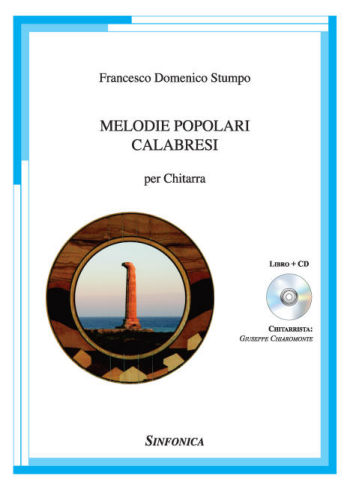
Review of Melodie Popolari Calabresi per Chitarra by Francesco Domenico Stumpo, Sinfonica, 2015

Edizioni Musicali Sinfonica realizes this book of musics by the composer Francesco Domenico Stumpo, accompanied by the recording on CD of the same music by the italian guitarist Giuseppe Chiaramonte.
Maestro Stumpo is not new about creating scores for guitar bound to the Calabrian tradition, having already released the song Dance with Calaraba for the anthology called "Dusan Bogdanovic presents" for the italian publisher Carish. In this book / CD he presents this collection of eight songs, all with characteristics linked to the popular tradition of Calabria. As written by the composer in the introduction the purpose of these passages is to give an educational value and to present Calabrian musical tradition and guitar. The guitar is present in the regional tradition in the form of ""chitarra battente" and French (acoustic) guitar and so in this context, the classical guitar lends itself easily into a crossover role, or better, of a cultural bridge between a popular tradition and a form linked to the academic tradition -classica.It seems to me that in this sense the music of Francesco Domenico Stumpo have not failed to seize and realize this ideal transition avoiding the risk of falling into a formal trivialization and crystallization of structures related to a popular clichés and a predominantly oral tradition and free from rigid defined structures .
These scores, of intermediate difficulty level, have been fingered and recorded by Giuseppe Chiaramonte allowing even the simple amateur to venture himself in execution confronting, listening to and  immediately finding an easier fulfillment in his study.Often contemporary composers have locked them selves in their ivory towers, considering themselves the only guardians and priests of the musical art, looking for a perfect self-indulgent and devoid of any content. I think that Maestro Stumpo's music goes to another direction: biology teaches us that hybrids are never an easy thing, but can give great satisfaction.

http://www.sinfonica.com/italian/risultati.php?cerca=chiaramonte

martedì 11 agosto 2015

"Una Serata con Mr. Bream" nuovo programma radio su Radio Voce della Speranza


E' con molto piacere che Vi annuncio che a settembre partirà un nuovo programma radio dedicato al mondo della chitarra classica. Si chiamerà "Una Serata con Mr. Bream" e sarà interamente dedicato alla produzione discografica del grande chitarrista britannico. Il programma sarà curato da Andrea Aguzzi, webmaster del Blog Chitarra e Dintorni Nuove Musiche, e andrà in onda ogni mercoledì sera alle 21 su Radio Voce della Speranza. Come per il precedente programma radio Guitars Speak, anche "Una Serata con Mr. Bream"  sarà scaricabile e ascoltabile in podcast e streaming.


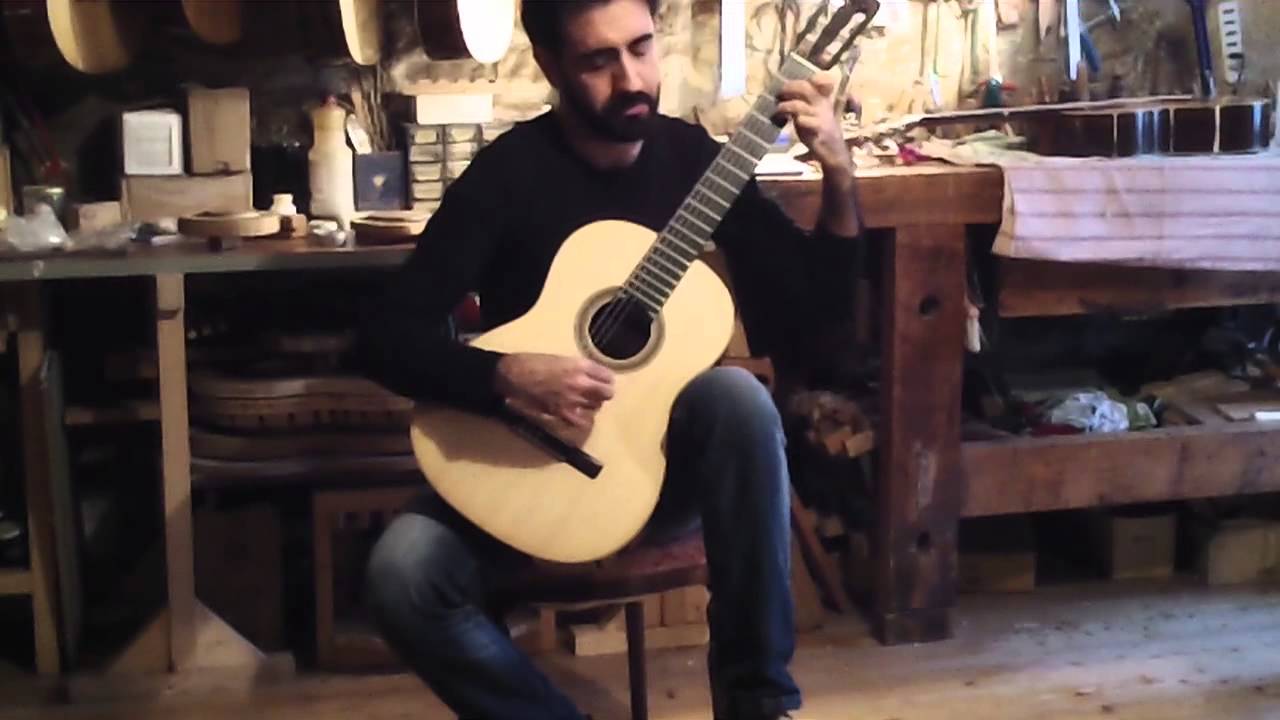
Giuseppe Chiaramonte plays Francesco Domenico Stumpo's passages


lunedì 10 agosto 2015

Recensione di Melodie Popolari Calabresi per Chitarra di Francesco Domenico Stumpo, Sinfonica, 2015


Le Edizioni Musicali Sinfonica realizzano questo libro di spartiti ad opera del compositore Francesco Domenico Stumpo, accompagnati dalla registrazione in cd delle stesse musiche da parte del chitarrista calabro-milanese Giuseppe Chiaramonte.
Il Maestro Stumpo non è nuovo alla realizzazione di spartiti per chitarra con tematiche improntate alla tradizione calabrese, avendo già pubblicato il brano Danza Calaraba nell'antologia con cd "Dusan Bogdanovic presents" per la casa editrice Carish. In questo libro/cd ci presenta questa raccolta di otto brani, tutti con caratteristiche legate alla tradizione popolare calabrese. Come scrive lo steso compositore nell'introduzione lo scopo di questi brani è quello di una valenza didattica e di divulgare la tradizione musicale calabrese per chitarra. La chitarra è presente nella tradizione regionale sotto forma di chitarra battente e francese (acustica) e quindi in questo ambito la chitarra classica si presta agevolmente nel ruolo di crossover, o meglio, di ponte culturale tra una tradizione popolare e una forma legata alla tradizione accademica-classica.
Mi sembra che in questo senso le musiche di Francesco Domenico Stumpo siano riuscite a cogliere e a realizzare questa ideale transizione senza il rischio di cadere in una formale banalizzazione e cristallizzazione di strutture che legate a una vulgata popolare e a una tradizione prevalentemente orale e libera da strutture rigidamente definite.
Gli spartiti, di livello di difficoltà intermedio, sono stati diteggiati e registrati da Giuseppe Chiaramonte permettendo anche al semplice dilettante di avventurarsi nell'esecuzione confrontandosi immediatamente nell'ascolto trovando un più facile appagamento nel loro studio.
Spesso e volentieri i compositori contemporanei si sono chiusi nella loro torre d'avorio ritenendosi gli unici custodi e sacerdoti dell'arte musicale, alla ricerca di una perfezione autoindulgente e vuota di ogni contenuto, le musiche del Maestro Stumpo mi sembra vadano in un'altra direzione: la biologia ci insegna che gli ibridi sono mai una cosa facile, ma possono dare grandi soddisfazioni.


domenica 9 agosto 2015

dotGuitar il nuovo WeBlog Magazine italiano dedicato al mondo della chitarra


dotGuitar  il nuovo WeBlogMagazine italiano dedicato al mondo della chitarra
dotGuitar  the new italian WeBlogMagazine dedicated to the guitar world

Piu' di 900 pagine sempre on-line a disposizione per te gratuitamente!
More then 900 free pages always on-line!

I nuovi articoli luglio 2015
New pages - 2015, July
- NEW!!! Scarica l'App gratuita per seguire dotGuitar/BLOG e dotGuitar/MAGAZINE sul tuo iPhone o Android.
Digita http://mippin.com/app/dotguitar sul tuo phone e segui la procedura.
- NEW!!! dotGuitar/CD  La nuova WebLabel dedicata al mondo della chitarra 
- NEW!!! dotGuitar/Shop  Il nuovo negozio on-line dedicato al mondo della chitarra => VAI
Updated

Updated

Updated

Protagonisti 
Incontro con Eduardo Isaac => VAI

- Discografia  => VAI
- Hanno detto di lui  => VAI
- Pubblicazioni  => VAI
- Youtube  => VAI
NEW Release!!! 
WINNERS
N.Montella:  SONATA

=> COMING SOON

NEW Release!!! 
WINNERS
Thierry Begin L.:  AQUARELLE


NEW Release!!!  

Duo Eterna: ETERNA
Duo Eterna: ONDULANDO
=> COMING SOON

venerdì 7 agosto 2015

What’s that thing called tango? by Rubén Andrés Costanzo first part


"... The taste of tango simply is, you don’t create it, you can’t produce it, you can immagine it. And this is why tango is not a work, or a man, or an instrument-invariant basis on which you build the most absurd literary definitions-;it is not even a musical notation”1

A pair of dancers engaged in a passionate dance, erotica, with a complex choreography that seems to struggle against the rhythm instead of being lead by him, this is the image that an Italian or an European has about tango. Investigated among the inhabitants of Buenos Aires, we discover that the perception of the tango is like an invisible rope that ties the whole city, the tango evokes its own neighborhood, friends of the bar, your mother, an unrequited love, the nostalgia of the present, anger. Only one thing and two perceptions that travel in opposite directions. It is not easy to define in words tango and it happens very often that the words are not the most suitable instruments to define a thing but at the same time they are essential to describe the thing.

What to do then? Let’s circumscribe the tango in some limits. Geographic: tango is a phenomenon born of a fusion of different cultures that developed in the cities of Montevideo in Uruguay and Buenos Aires in Argentina. Temporal: origin end XIX century and early years of the twentieth century, some etnomusicologists tango was born in the last decades of the 1800s as the imitation of the dances of African origin, the imitators were European immigrants who lived in the slums of the cities mentioned, this "new" dance hadn’t his own music and it was adopting and adapting different musical rhythms present in that area, including the milonga, the Habanera, and even the mazurka, in the late 800's there was also another rhythm of music from Spain called tanguillo or tango andaluz, very fashionable in rioplatensi theatre2.
There are other theories and musical analysis about the origin of tango, I will show a bibliography with some interesting work on the topic, for those who want to deepen. Now focus your attention on the phenomenon tango since 1897, the year of the creation of the tango El Entrerriano, one of the most ancient tangos of which we know the author: Rosendo Cayetano Mendizabal; let’s discover if there is a " tanghità ", an essence , which gives the same identity to El Entrerriano by Mendizabal and Troileana Suite by Astor Piazzola composed in 1975, including all tangos composed between these two dates from thousands of musicians.

The challenge is interesting: to determine whether the essence of a phenomenon which spans 100 years of history, changing his shape according to historical circumstances, and the modes and contaminations, continues to be the same or even we call tango different things. In the beginning I reported in the different perceptions that Europeans and porteños3 have about tango inside porteña society, even if the perception of tango is the same, the debate about the true essence of tango, it’s harsh and ancient as is tango.
Imagine the tango like a river that is born in the high mountains formed by streams of melting water and then, as it progresses towards the sea changes its shape, color and size. The tango as Josè Gabello said: "is not as centrifugal as jazz which split consistently into new musical species. It is centripetal. It draws everything toward itself. Incorporates everything. Anything that puts in his body: it ingests, digests and metabolizes”4. Consequently, all that remains "outside" even if it seems tango is not tango.

But outside what? Please excuse the rioplatense campanilism in this response, the main essence of the tango can not be other than to represent, explain, convey and share the way of being of the inhabitants of Montevideo and Buenos Aires. The tango, as music, was born at the late 800's to give to the Buenos Aires’s inhabitant a rhythm suited to the steps of a new dance, which needed a music with a short melodic phrases and rhythmic fast execution (the first tangos were performed in 2 / 4) to perform its frenetic choreography, which enhance his individual skills and show who was the boss of that universe called by Borges "the cult of knife and courage5”, satisfy this need for the tango was his first essence.
Not only in the suburbs of Buenos Aires and Montevideo social habits was changing. The world at the end of'800 was changing, the masses began to play an important role in political, social and cultural decisions, changed their habits, the old and caste dances where men and women would lightly approaching, were leaving space to dance for a couple where the dancers were bound in an embrace, the most representative example: the waltz. In this wind of change and in an Europe open to all new exotism makes its appearance tango. In 1906 the Cadets from Fregata Sarmiento (the training ship of the Argentine naval fleets) in their annual round trip, left in each port visited scores of La Morocha tango, in 1907 a large warehouse in Buenos Aires, Casa Gath & Chávez sent to Paris, the composer and performer Angel Villoldo, with Alfredo Gobbi and his wife Flora Hortensia Rodríguez to record some tangos on disk. Villoldo will return to Buenos Aires in 1908, while the Gobbi and his wife remained in Europe spreading the tango until the outbreak of the First World War.

1 Horacio Ferrer op. cit. in Ernesto Sabato Tango discusiòn y clave. Buenos Aires Editorial Losada 1963
2 Rioplatense: Rio de la Plata is the river where have been founded the cities of Montevideo and Buenos Aires, the rioplatense term is the adjective that identify the provenience from that zone
3 Porteño: adjective that identify the provenience from the city of Buenos Aires
4 Josè Gabello. El tango como sistema de incorporaciòn. Buenos Aires, Academia Porteña del Lunfardo. 1987
5 Jorge Luis Borges. Il tango, Poesia del libro L’altro, lo stesso. JLBTutte Le opere. Arnoldo Mondadori Editore. Milano.1994

Photo by Pat Ferro

giovedì 6 agosto 2015

MPBN's Maine Arts! Guitarist Sharon Isbin - Live in Concert


On June 29, 2012 Sharon Isbin came to Maine to perform as part of the inaugural Portland Performing Arts Festival. Isbin presented a diverse program featuring Latin romances for guitar by Tarrega, Albeniz, Granados, and Barrios Mangore, as well as Andecy by Andrew York and the Joan Baez Suite written for her by John Duarte.

mercoledì 5 agosto 2015

Review of Cinefantastique by Gary Lucas, NSPY, 2013


With his Cinefantastique record Gary Lucas makes a very personal collection of movie sountracks performed mainly with only his acoustic guitar but also with an elaborate pedals and effects set that enables him to create any necessary atmosphere and musical accompaniment. This CD is really beautiful, interesting, creative, full of good ideas, and it is yet another confirmation of the prodigious musical talent by Gary Lucas, always ready to play using a spectacular, yet never over-invasive technique.
Records like this are not new, many guitarists, including Italians, like climbing reinterpreting film music, the same Lucas is not new to such initiatives and has performed live music for silent films for decades and, in fact two of the songs on the CD were already on his first solo album, long out of print, Skeleton at the Feast. While some of these songs are well-known film themes, others are more obscure, and some have been written or improvised by Lucas himself. Cinefantastique is a beautiful collection that manages to redefine the concept of "guitar solo" for the listener who is not familiar with the work of Lucas and solo work. Entr'acte's 20 minutes are simply exceptional .


martedì 4 agosto 2015

Gary Lucas' s videos from Cinefantastique


Gary Lucas is an American guitarist, songwriter, soundtrack composer, and a recording artist with more than 25 solo albums. He has been described as a "guitarist with a global guitar" (Larry Rohter, 9 May 2011, New York Times) "one of the best and most original guitarists in America" (David Fricke, 16 November 2006, Rolling Stone); a "legendary leftfield guitarist" (The Guardian, 24 December 2005); "the thinking man's guitar hero" (The New Yorker, 8 January 2007), "perhaps the greatest living electric guitar player" (Daniel Levitin) and one of "the most innovative and challenging guitarists playing today" (fRoots, March 2002). Lucas' style melds easily into rock and blues, has "avant-garde affinities", but is "not easily typecast" according to the Wall Street Journal. He is also associated with vocalist Jeff Buckley, who performed for a year in Lucas' band, Gods and Monsters, early in his career. Lucas tours the world solo, as well as with several different ensembles including his longtime band, the NYC-based Gods and Monsters, a psychedelic rock band based around Lucas's guitar playing and songwriting.

http://www.garylucas.com/


lunedì 3 agosto 2015

Recensione di Cinefantastique di Gary Lucas, NSPY, 2013


Con questo suo Cinefantastique Gary Lucas realizza una personalissima raccolta di musica da film eseguite in solo principalmente con la sua chitarra acustica ma anche con un elaborato set elettrico che gli permette di generare qualunque atmosfera necessaria all'accompagnamento musicale. Il cd è davvero bello, interessante, creativo, pieno di ottime idee , ed è l'ennesima conferma del prodigioso talento musicale di Gary Lucas, sempre pronto a suonare e a giocare sfruttando una tecnica spettacolare ma allo stesso tempo mai eccessiva o invasiva sui contenuti che sa proporre.
Dischi come questo non sono una novità, è da diverso tempi che molti chitarristi, anche italiani, amano cimentarsi reinterpretando musiche da film, lo stesso Lucas non è nuovo a simili iniziative: ha eseguito dal vivo musiche per film muti da decenni e, di fatto, due dei brani presenti nel cd erano già presenti sul suo primo album solista, da tempo fuori stampa,  Skeleton at the Feast. E mentre alcuni di questi brani sono ben noti i temi cinematografici, altri sono più oscuri, e altri ancora sono stati scritti o improvvisati da Lucas stesso. Cinefantastique è una bella collezione che riesce a ridefinire il concetto di "assolo di chitarra" per l'ascoltatore che non ha familiarità con il lavoro di Lucas e con lavori solisti. Eccezionali i 20 minuti di Entr'acte.


domenica 2 agosto 2015

Ana Vidovic - Guitar Artistry In Concert - full concert


A child prodigy, she started playing guitar at the age of five, inspired by her brother Viktor. She began performing at the age of 8 and by the age of 11 she was performing internationally, and at 13 became the youngest student to attend the prestigious Academy of Music in Zagreb where she studied with Professor Istvan Romer. Vidović's reputation in Europe led to an invitation to study at the Peabody Conservatory in Baltimore, U.S., with Manuel Barrueco, from where she graduated in May 2003. She has lived in the United States since, where she also works as a private tutor. She has released 6 CDs published by Croatia Records, BGS, and Naxos and has released two DVDs published by Mel Bay publications. Vidović has won an impressive number of prizes and international competitions all over the world. These include first prizes in the Albert Augustine International Competition in Bath, England, the Fernando Sor competition in Rome, Italy, and the Francisco Tárrega competition in Benicasim, Spain. Other top prizes include the Eurovision Young Musicians competition, the Mauro Giuliani competition in Italy, the Printemps de la Guitare in Belgium, and the Young Concert Artists International Auditions in New York. The Gramophone remarked on her "extraordinary dexterity"
http://www.anavidovic.com/


0:00 - Fandanguillo  (Suite Castellana) - Federico Moreno Torroba 1:45 - Arada (Suite Castellana) - Federico Moreno Torroba 5:50 - Danza (Suite Castellana) - Federico Moreno Torroba 7:45 - Altiplanos - Pierre Bensusan 12:55 - Verano Porteño (de las 4 Estaciones Porteñas) - Astor Piazolla 17:12 - Milonga del Ángel - Astor Piazolla 22:45 - La Muerte del Ángel - Astor Piazolla 26:45 - Primavera Porteña - Astor Piazolla 32:25 - Farewell - Sergio Assad 35:35 - Cavatina - Stanley Myers 39:00 - Estudio N° 1 - Heitor Villalobos 41:10 - Estudio N° 8 - Heitor Villalobos 43:48 - Estudio N° 7 - Heitor Villalobos 47:50 - La Catedral - Preludio saudade - Agustín Barrios Mangore 50:00 - La Catedral - Andante religioso - Agustín Barrios Mangore 51:50 - La Catedral - Allegro solemne - Agustín Barrios Mangore